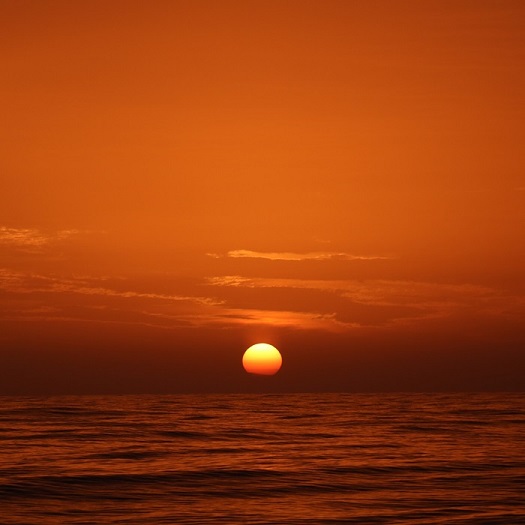
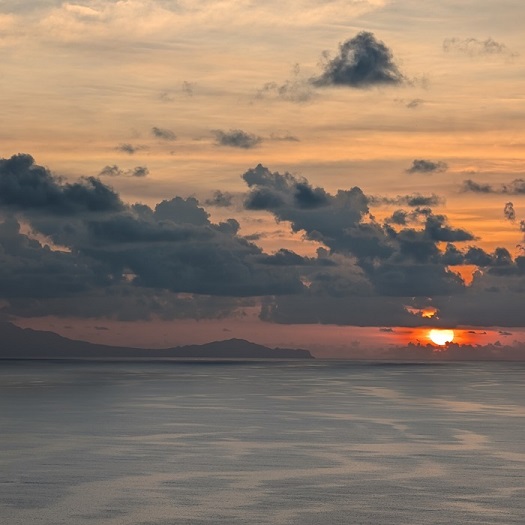
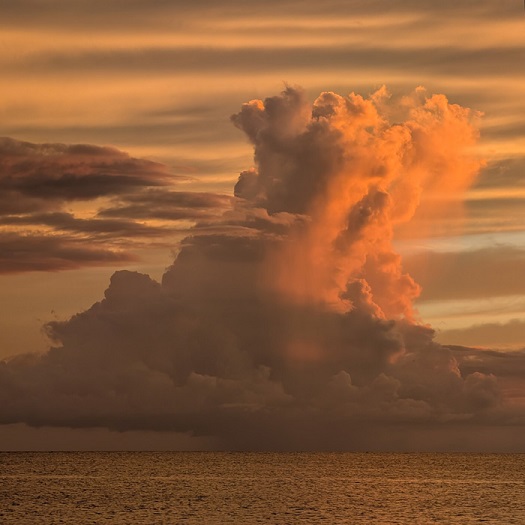
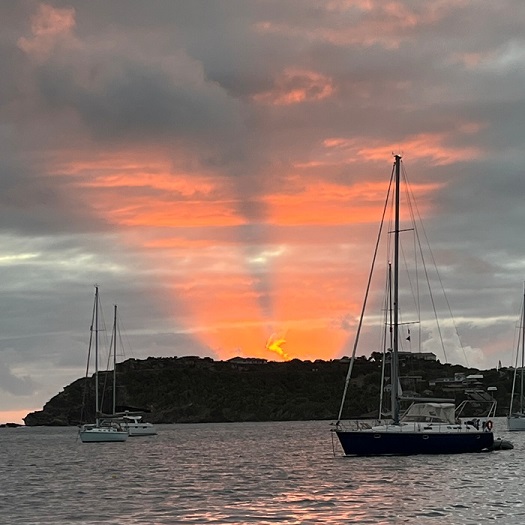
The crew of Pandora are home in CT, Hurricane Melissa has come and gone and the Salty Dawg Caribbean Rally fleet is on their way south to Antigua.
As they make their way south here I am in CT, thinking about spring. The coming cold weather is going to take some getting used to, as with rare exception, we have not been home during the winter for a decade.
Beginning in 2012 Brenda and took a big gulp and shoved off for the Bahamas, making our way down the Intra Coastal Waterway, arriving in Ft Lauderdale in December and then crossing to the Bahamas in early January. And, for nearly every year since then, we have avoided the cold New England winters, until now…
2012 seems so long ago and since then we have spent several seasons in the Bahamas, a few months in Cuba and for nearly a decade seasons in the eastern Caribbean.
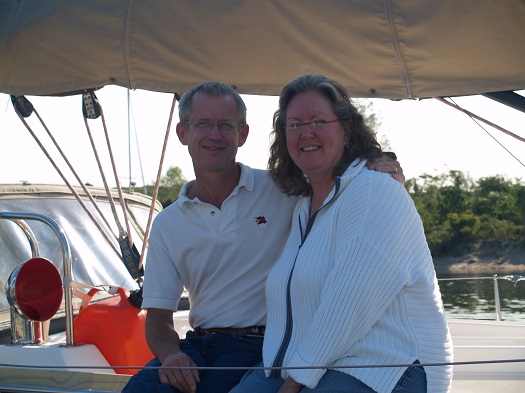
This is us as we began our run from CT way back then.
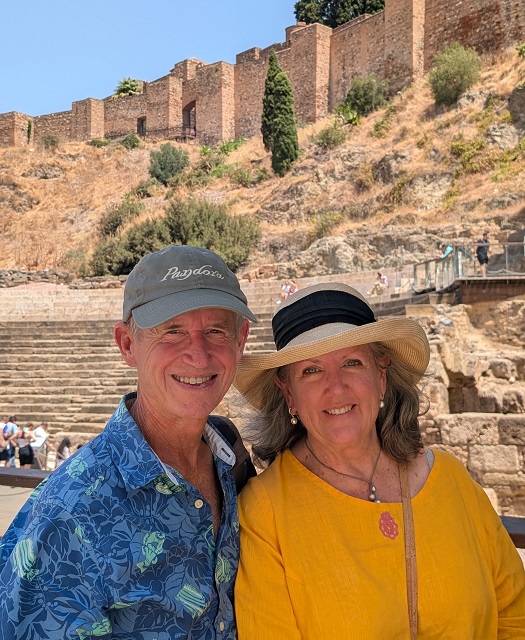
And this is us this August in Madrid. A bit older but still pretty good. Right?
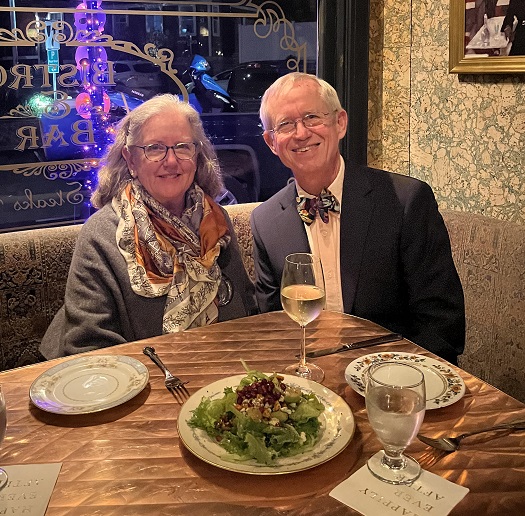
And, while I am on a roll. A photo of us out for dinner recently for the 53rd anniversary of our first date on October 28th, 1972. Yikes!
Enough? Be glad that I didn’t fall farther down that rabbit hole and start showing wedding photos or pix of our grandchildren.
Ok, back to the topic at hand.
Now, with Pandora in Spain after my trans-Atlantic run this year, (not bad for an old guy, right?) our plans have us in the Med for the next few years. The plan is trade the balmy winters of the Caribbean for time in the spring and fall in the Med.
Don’t get me wrong, I am pretty excited about exploring the Med but between now and our time aboard beginning in April, looms a long New England winter and as the fleet heads south, I have to admit that I am feeling a bit left out.
This flipping of the seasons has lead to many changes to our routine, the details only beginning to emerge. During the summer we have two large caldrons with water plants and a few koi and goldfish. In past years we have returned the fish to the watergarden place in the fall and gone back for some “new” ones each spring.
Well, given my new “landlocked” state this winter I thought it would be fun to “winter” the fish at home and purchased a used 50 gallon aquarium for my office so I can keep those fish for the winter instead of giving them up. I mention this as this is just one example of what I am focusing on to offer myself solace as winter approaches. Sailing…fish tank…? At least it is water, I guess…
The tank, complete with a dozen small goldfish/koi is giving me something to focus on as I prepare for a “long winter nap”.
I mention this as “feeding time at the zoo” has become a sort of weird parable for how I feel as I see winter approaching. Before I explain more, perhaps this short video of the fish, will set the stage.
Over the last month or so the fish have become accustomed to my presence as an opportunity to be fed and they go crazy as I approach.
Yes, this is a particularly odd analogy, but to me as the fish go crazy trying to get my attention, vibrating with excitement, hoping that they will get what they want, I can’t help but compare them to my own circumstances as I too watch from the “other side of the glass”, the 100+ Salty Dawg Rally boats that are making their way south for the winter.
A frenzy of FOMO, Fear-of-Missing-Out, or in my case, just a simple MO, Missing-Out, after more than a decade of winters afloat is taking some getting used to.
As I consider what the Rally folks are doing as they head south, I am feeling like I too am “on the outside looking in”, and I don’t like it at all 🙁
Of course, that totally ignores the reality that we will soon be sailing in the waters of Odysseus and there is likely no better way to see the Mediterranean countries than by boat, the same way that that famous Greek traveler did so long ago. He was Greek, right? Shows that I have a lot to learn, doesn’t it.
The problem for me is that I really don’t know what to expect. The questions are endless. I suppose that there are just as many uncertainties now as I had when I first contemplated heading to the Caribbean. Where should I go? Were there places to anchor that would be sheltered? Was it going to be terribly complicated and expensive to move from country to country?
All these questions and more are now back on the table but as I learn more about the waters we will be exploring I expect that my MO will soon be replaced by WMNMOAA, We-May-Not-Miss-Out-After-All, and hopefully in time by WADI, “We-Are-Doing-It”. I expect what lies ahead will be great fun and perhaps even better than what we have seen in the Caribbean.
Yes, I am currently feeling a bit of FOMO, or a resignation that it’s more like MO, so I think that I had better reach out to others that have gone before and learn from them.
So, have you sailed in the Med and want to share your experiences? I hope so and if you want to talk reach out to me at bob@sailpandora.com.
Please write… I have the whole winter ahead of me and am anxious to pivot as soon as possible from MO to WADI and soon.
If you too are suffering from MO, check out the fleet tracking map for the 100+ boats that are heading south as part of the Salty Dawg Rally to the Caribbean.
It’s been more than a month since I last posted and while I have been very busy at home, not keeping up with posts has been dragging on me.
I have been focused on stuff around the house and lamenting that I will not be aboard Pandora this winter, something that with rare exception, has not happened for more than a decade.
To that point, it was just a few degrees above freezing when I got up this morning. And, it’s only going to get worse.
After the unfortunate experience with orcas near Gibraltar, I have been wondering what I might have done differently to avoid the damage. In the event that you missed that, check out this post that I did shortly after the “attack” that took part of my rudder and badly damaged my Hydrovane auxiliary steering.
Some skippers do a massive amount of research when they are heading somewhere new but I tend to be a bit more cusary than some even though I talk to “those who have gone before” with an eye toward getting a feel for what lies ahead.
Such was the case with my hope to pass through “orca alley” near the Iberian peninsula as I made my way the final distance to Gibraltar.
Not to repeat too much from that earlier post I noted above, but during our last night before reaching Gibraltar, our next landfall, Pandora had handled some rough weather overnight, gusts on the beam in the mid-30s and big seas that broke over the deck several times. By morning, the worst had eased, and soon the coast of Morocco was just visible off the starboard bow.
I guess that being past the rough conditions of the prior night kept me from focusing fully on the possibility of being “whacked” as we got near Gibraltar. Additionally, as is my custom, we were then close enough to shore to activate Starlink without racking up extra offshore costs, so I turned it on.
Unfortunately, this distracted us from keeping a careful lookout which I do think had a bearing on the orcas pod being able to approach us without us even noticing.
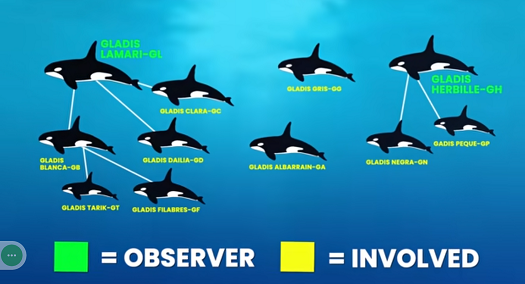
For months I had been following reports of orca attacks on sailboats along the Iberian coast—rudders broken clean off, stainless rudder posts bent and a few boats sunk. The Strait of Gibraltar has been the epicenter of this behavior since it began around 2020. There are a dozen or so individuals, mostly juveniles, believed to be involved. Scientists think they are “practicing” hunting or simply playing, attacking rudders for sport. In keeping with our habit of giving notable animals names, Iberian orca that have been involved in the attacks with vessels are referred to as Gladis.
As I mentioned in many posts prior to my final leg from Sao Miguel in the Azores, I had done my homework. I studied www.orcas.pt, a comprehensive site that tracks orca sightings and attacks, and planned a route that seemed the least risky. The data showed very few recent encounters along the Moroccan coast, compared with many farther north where the orcas had followed the tuna. I figured we would slip through safely on that southern track.
We were within a few miles of the narrowest part of the strait of Gibraltar, making about ten and a half knots over the ground, with a push from the current, when it happened. The boat shuddered violently, the wheel spun out of my hands, Pandora lurching to one side, and again, and again…
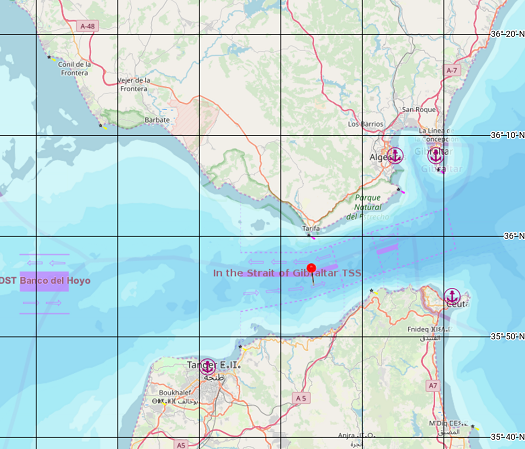
This shot shows more or less, where the attack happened. As I was so close to Gibraltar I thought that the worse was behind me. Oops…
For a few seconds, none of us knew what had happened. Had we hit something? Then a massive black-and-white shape slid beneath the stern. An orca. And then another. And another. In total, maybe four or five of them, each easily fifteen to twenty feet long, closing around us, taking turns striking the rudder.
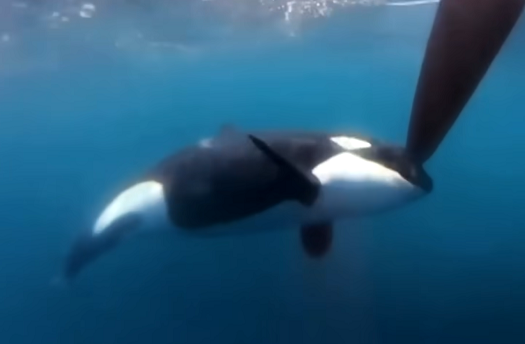
I have been told that orcas don’t actually bite the rudder they ram it from the side. This image, not taken by me, shows the relative size of these creatures to the rudder itself. As you can imagine, rudder vs 10 ton orcas, the outcome is pretty clear.
One of my crew grabbed his phone and started filming. The footage is grainy, but it captures the chaos—the sudden jerks of the wheel, the froth behind us, the unmistakable fin slicing past the transom. All I could think was “will Pandora sink?.” (You can watch the short clip [here].)
It is hard to describe what that moment felt like—equal parts awe and terror. These are magnificent animals, but knowing that one well-placed hit could snap the rudder post or crack the hull was sobering.
A few weeks ago I presented about our trip to the Azores as well as the “attack” at a yacht club on The Cape. And as luck would have it, that morning there was a segment about a sinking on the Today Show.
In this case, the video was taken from a nearby boat as the sailboat was repeatedly rammed and ultimately sunk.
While the damage to Pandora was minor compared to a sinking, I clearly felt Pandora’s stern being roughly pushed from side to side as is shown in the video. It was a very unpleasant feeling.
I have wondered what leads to some boats sinking and others just suffering a damaged rudder. Was it something about the rudder, the strength of the hull, rudder bearings or the way that the rudder was constructed that made a difference?
Pandora was designed and constructed as a solid, if modern, offshore boat and as an added feature of strength, the entire hull incorporates a layer of Kevlar, which is pretty tough stuff.
As part of that “toughness” the rudder post is carbon fiber. A feature of carbon fiber is that it does not bend. In a hit like that, it either holds or it shatters dramatically. In this case, it held.
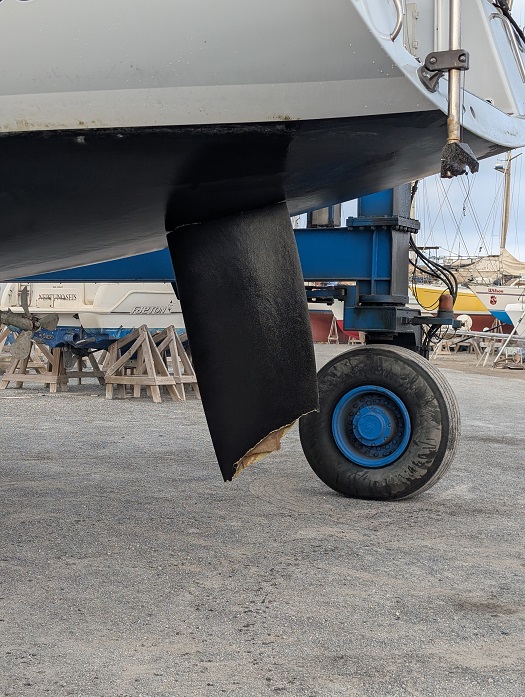
As the orcas battered the rudder the bottom third broke off, leaving it hanging by a flap of fiberglass. Later, I learned that this was a blessing in disguise: my rudder was built with a sacrificial lower section, meant to shear away cleanly in a grounding—or, apparently, an orca encounter. I have heard that once the damage is done, a portion of the rudder snapped off, that they often loose interest but keep pounding on rudders that resist their efforts, leading to more substantial damage.
Interestingly, years ago I hit my SAGA 43 rudder HARD on a rock and while the stainless shank bent, the bottom of the rudder did not break. In asking a friend who is very familiar with production boat construction about my experience with the orcas and the broken rudder and he told me that most production boats have a stainless post that goes all the way to the bottom of the rudder. This would not be good in an orcas strike as the rudder itself would likely hold, perhaps frustrating the orcas which would encourage them to continue striking the rudder until something let go. It is likely that the shaft would bend and the longer that the strikes continued, the worse the potential damage would be.
Yachts with stainless rudder posts often end up with bent shafts that jam their rudder against the hull and perhaps linkages destroyed, leaving them without steering entirely. Once the orcas get started they tend to keep hammering until something gives.
In some cases where boats sunk, it was because the lower support for the rudder post broke away from the hull, leaving a large hole around the then-destroyed lower bearing and hull. With a large hole like that it doesn’t take long to for the boat to sink.
Our Hydrovane, wind vane steering, did not escape either—the reinforced plastic rudder was cracked and bent 90 degrees. Fortunately, there was enough of our primary rudder left so I could still steer, if sluggishly, so we limped on toward Gibraltar at reduced speed, dragging the remnants of both rudders through the water, substantially cutting our speed.
I keep the Hydrovane in place in the event of a steering problem and so wish that I had just pulled the plastic rudder when things calmed down as we approached the coast. Now damaged, the repairs needed are fairly substantial. Lessons learned…
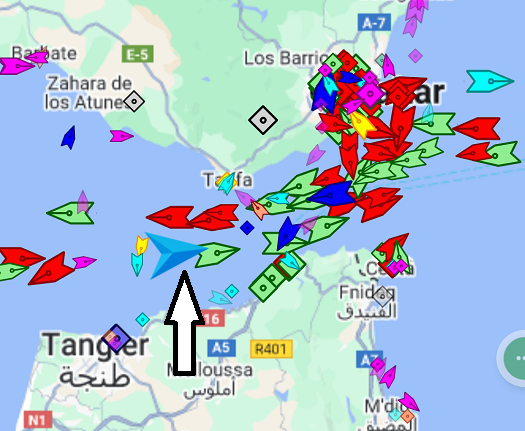
Shaken and really ready to be in port, I was on the southern side of the Gibraltar shipping channel. I found crossing the busy channel to be more than a bit nerve wracking as I threaded my way behind ships with the hope of getting out of harm’s way before the next ship came up on me. This shows just how busy it was. Note the arrow I have placed on the image which is where we were shortly after the attack.
We tied up at the marina in Gibraltar just before sunset, grateful to be in port. The next morning I put on a wetsuit, hooked up my hookah dive compressor, and went over the side with a handsaw to finish removing the remains of the primary and Hydrovane rudders. The section of the primary rudder that had snapped remained attached by its fiberglass skin, which turned out to be fortunate as the yard in Almerimar, Spain was able tore-bond the damaged section once we hauled out.
Lessons from the Attack
Looking back, there is a lot I might have done differently had I known then what I know now. The first and most obvious lesson is that while I thought the orcas were farther north they were waiting right where we made landfall. There have been many fewer attacks in shallow water, under 20m so I should have hugged the coastline but due to crew departure plans and my desire to make port, I didn’t take the “slower” coastal route.
The orcas.pt site is an excellent tool for sailors crossing this coast. It offers an interactive map of sightings and attacks, depth data, and Telegram groups where cruisers share real-time positions. Before transiting the Gibraltar or Portuguese zones, it is worth checking the latest sightings and attacks and adjusting your track. Data from hundreds of sailors show that most interactions happen in water 20 to 1000 meters deep, where the orcas hunt bluefin tuna. Inside 20 meters, encounters are less common. Where I was when attacked I was only about 3-4 miles from shallow “safe” depth, so perhaps had we kept a better lookout we might have been able to head to shore when they were approaching.
To that point, the advice is to hug the 20-meter contour—in water shallow enough that the orcas do not typically frequent those areas. Safety is not guaranteed, but statistically it reduces risk.
So, what do you do if you see orcas?
Disengage the autopilot so the wheel can spin freely.
Keep hands loosely on the helm—a hit can whip the wheel dangerously.
Power toward shallower water as quickly as possible.
Do not use fireworks, or noise-makers—they are illegal in Spanish and Portuguese waters and may aggravate the whales.
Document and report your encounter to Orcas.pt and local maritime authorities. Every report improves the database for future sailors.
Remove auxiliary wind steering rudder as any attacks are likely to take out that too. If needed, it can be put back in place.
There has been some preliminary reports that towing certain acoustic devices may deter some attacks but these devices have not undergone formal testing.
Well, hindsight is 20-20 and while advice is changing, this is the playbook today. A few years ago, sailors were told to stop engines and drift, but research now suggests that quiet, stationary boats may encourage more prolonged interaction. Better to keep moving, steadily, toward safety.
From Gibraltar, I motor-sailed east to Almerimar, Spain, about 150 miles, where she was hauled for the season. The yard there was able to repair the rudder and Pandora is as good as new once again.
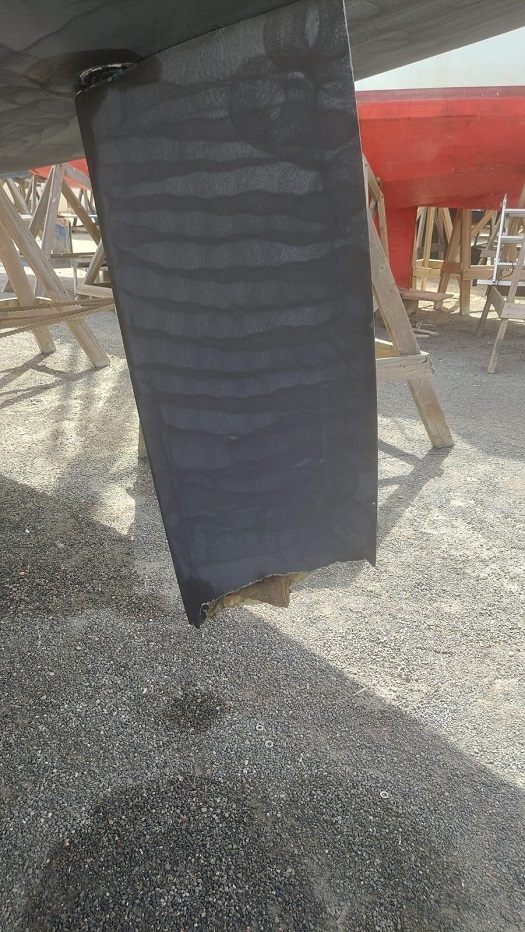
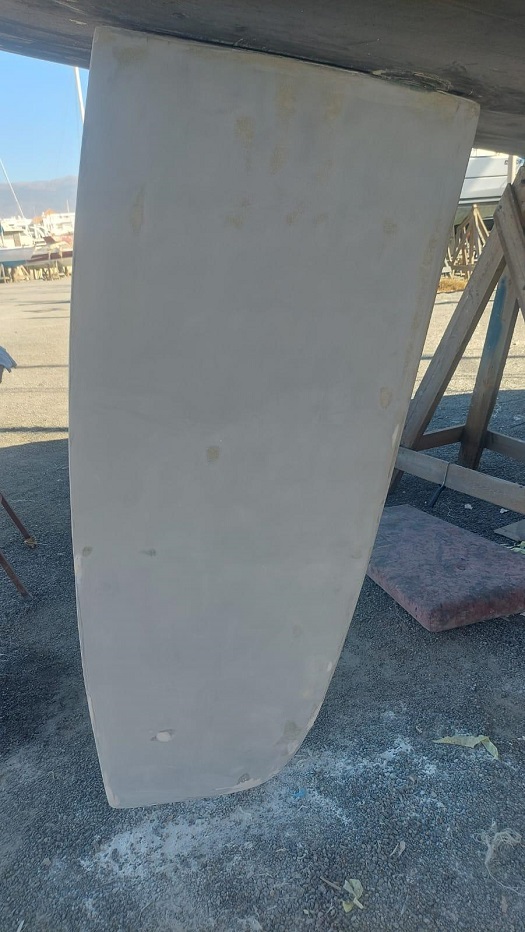
Here is what her rudder looked like when she was hauled on Almerimar.
Now, as good as new…
For sailors used to worrying about weather and gear failure, the idea of being attacked by whales, actually the largest member of the dolphin family, feels almost absurd. But for now, it is part of the calculus of cruising these waters. The reports continue: dozens of boats attacked each season, mostly between May and October, as the orcas follow the tuna migration north and south.
Would I do it again?
Yes—but I would plan differently. Instead of being concerned about making landfall in Gibraltar on a particular day, I would hug the shore and be less concerned about keeping a schedule to satisfy crew plans.
There is still a lot we do not understand about why these orcas are doing what they do but the prevailing theory is that they are just out for a good time. But to be on the receiving end still seems more like an attack than fun.
Brenda likes an analogy comparing all this to a cat “playing” with a mouse. The cat is clearly enjoying themselves while the mouse is terrified. Ultimately, the mouse looses, is killed and eaten. Sure, it’s fun for the orcas but to be on the receiving end, not so great.
One thing for sure that as an apex predator with an abundant food supply, they have plenty of time on their hands to pursue “hobbies” and hopefully they will decide that there is something even more fun than damaging cruising boats.
In the end, I count myself lucky. Pandora did not sink, the crew came through unscathed, and I have a great story to talk about, again and again.
And, speaking of “telling the story”, I have been invited to give a number of talks on the subject, the first of which will be an interview style with Rui, the founder of orcas.pt. He and I will talk about this issue and provide some thoughts on “best practices” on December 9th at 5:00pm. If you re curious and would like to participate in the webinar, follow this link to the Salty Dawg webinar site to learn more.
Broken rudder and bruised pride aside, the run to Spain was memorable. And, with cruising the Med for the next few seasons, Brenda and I are looking forward to this next chapter, hopefully somewhere with fewer “playful” whales.
And under the category of “I wish I knew then, what I know now”. Well, actually I knew enough but didn’t follow the basic rule of “don’t try to keep to a schedule”. I was very focused on getting to port and had I just taken a bit longer and hugged the coast, I probably (PERHAPS?) could have avoided the attack.
However, as was once said, “experience is what you get when you don’t get what you want”. And in this case, I now have a great story to tell.
If you enjoy looking up at the clouds as I do, you are in good company as there is a society for people like us, the Cloud Appreciation Society I became a member in 2021 after reading an article about the group in the NY Times. The CAS has many resources for cloud lovers but the best benefit is their “cloud a day” where an image, suggested or submitted by a member, is sent out to their more than 50,000 members with a description of what the editors think makes that image special in the world of clouds.
As a new member, I was immediately hooked on the idea that perhaps one of my “clouds” might be chosen and shared. Over the last few years, I have summited more than a few photos for their consideration. Accepted or not, they always get back to you with their decision.
Yesterday, as I sat down with the NY Times and a cup of coffee to see what was going on in the world, along with all the usual upsetting stuff, I was delighted to see an editorial by the founder of the CAS, Gavin Pretor-Pinney, about clouds and how important the various types that we see every day are in regulating our climate.
I also learned that tomorrow, September 12th, is Cloud Appreciation Day. Who knew?
For me, every day is a day to appreciate clouds and I am always on the lookout for cloud photo ops that may be worthy of consideration by the editors of the society.
So far this year I have had four of my clouds published and sent out to their 50,000+ members. And they weren’t the first. I then realized that I had not kept proper track of what they had chosen from my submissions since I joined. Fortunate for me, I was able to reach out to one of their editors who was gracious enough to do some research and send me all of the links.
I was pleasantly surprised to learn that including my very first cloud photo on September 3rd 2021, there have been a full dozen to date.
Today, in recognition of Cloud Appreciation Day, I will share all 12 of the photos that the CAS editors chose along with their explanation of why they thought that the images were worth sharing.
The dozen…
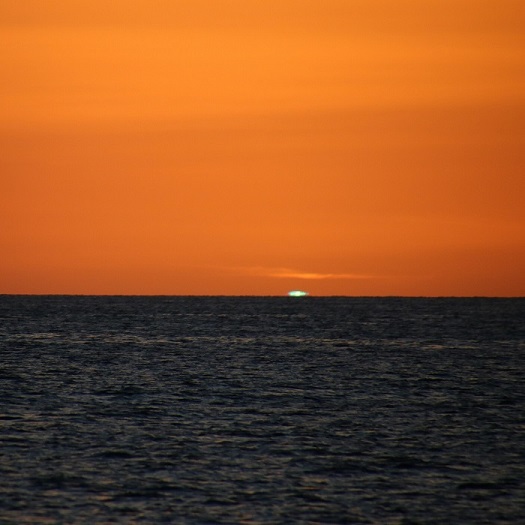
While not an actual “cloud” this was the very first one that they chose, an image of a green flash, a notoriously difficult moment to capture as it lasts for less than a second. I used sport mode to take several photos a second and selected the one that miraculously “captured the moment”.
If you wish to see their actual post in the format that they published, you can click on the link above each photo and my description. I have also followed the link with the photo and what they had to say about the image, in italics.
3rd September 2021 A “green flash” is legendary in the tropics and when the horizon is clear of clouds you can stand on deck and watch for the pop of green on the horizon as the sun drops below the sea. To celebrate the moment, we often “blow the conch”, a sort of trumpet made of a large Bahamian conch shell with the top removed so you can blow into it.
“At sunset over the island of St. Lucia, Lesser Antilles, Bob Osborn (Member 54,749) witnessed a brilliant jewel of emerald light wink from the very edge of the horizon. Visible typically for just a fraction of a second, this is a green flash – an optical phenomenon that is hard to spot and caused by complex atmospheric conditions. For any chance of seeing one you first need a clear, uninterrupted view of the Sun on the horizon, which is usually best met by looking at it across the sea like this. In certain conditions, the water’s surface can also be helpful in setting up the second requirement: a ‘temperature inversion’ down near the surface, which means there is a low layer of cool air beneath warmer air just above. This temperature profile bends, or refracts, the light, causing a mirage effect that distorts the shape of the Sun and gives the appearance of separated blobs of light just above its upper rim that form and disappear with the exact alignment of Sun and temperature inversion. Shorter wavelengths of the Sun’s visible light, which look blue, are refracted more strongly by the atmosphere than longer wavelengths, which look red, which means the shimmering distortion appearing fleetingly at the top of the Sun can look coloured. Since another effect of the low atmosphere is to scatter away more of the shorter blue-looking wavelengths of light, this glimpse of colour is the next colour of the rainbow, green. With all this in mind, you may have more success looking for a real emerald than this atmospheric one.“
13th March 2022 I have always enjoyed taking photos of clouds on passage as there isn’t a whole lot else to look at when we are hundreds or perhaps thousands of miles from land.
“‘Overhead the sun was running away from the clouds with all his might, and they were trying to catch hold of him one by one, in vain; for he rolled through their soft grasp, leaving their hands bright with gold dust.’
From Martin Pippin in the Apple Orchard (1921) by English author Eleanor Farjeon. Quotation suggested by Serena Beeks (Member 42,201).
Stratocumulus, Altocumulus, and Cirrus clouds chasing the setting Sun, spotted by Bob Osborn (Member 54,749) whilst onboard his sloop Pandora in the Atlantic Ocean between Hampton, Virginia, US and the island of Antigua.“
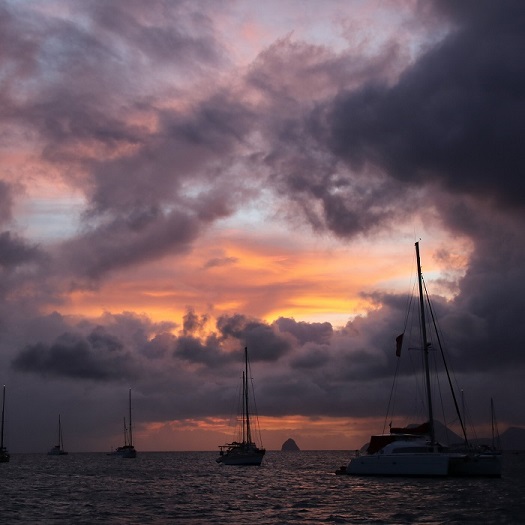
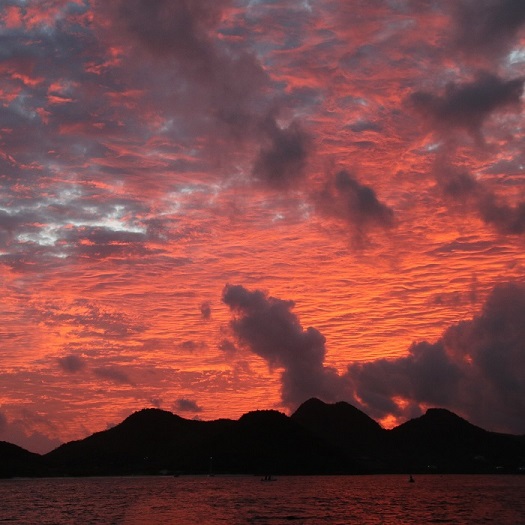
31st March 2022 Of course an even better time to capture a particularly special moment in the clouds is at anchor as I was in St Anne, Martinique, probably enjoying a rum punch.
“Bob Osborn (Member 54,749) spends winters in the Caribbean Sea on his boat, a sloop called Pandora. This time of year brings reliable trade winds that blow from east to west and make for good sailing. But, as Bob knows well, it can also bring squalls. These gusty rain storms can be intense but usually dissipate quickly. From safe harbour, while waiting for a squall to pass, Bob spotted the golden canopy of a distant Cumulonimbus cloud at sunset appearing between the low, shadowed forms of Stratocumulus and Cumulus fractus. The dark clouds parted with the passing of the squall as if they were settling down to roost.“
23rd August 2022 One of their categories is clouds that look like animals and I will admit that I spend a lot of time seeing what sort of critter I might find. I thought it looked like an elephant and they agreed.
“‘Dumbo! The ninth wonder of the universe! The world’s only flying elephant!’
The words of Timothy Q. Mouse in the Disney film Dumbo (1941).
A Cumulus mediocris cloud elephant spotted flying beneath a backdrop of Altocumulus undulatus and Cirrocumulus undulatus over the Caribbean Sea by Bob Osborn (Member 54,749).“
7th September 2022 During the pandemic, feeling safe after getting my first covid shot, I was heading from Antigua, bound for the Virgins with a friend and spied a “red sky in the morning”, which to us northerners, is a bad thing. While I was safe from weather issues, as the explanation below describes, I did contract covid, probably in St Thomas, and it spread to the rest of the crew on passage. As we were all vaccinated, the symptoms weren’t all that bad.
“Those familiar with the adage ‘Red sky in morning, sailor take warning’ might consider this fiery sunrise of Altocumulus undulatus with smoky Stratocumulus silhouettes to be an ominous start to the day. But the sky, spotted by Bob Osborn (Member 54,749), appeared over the Caribbean, just north of Antigua, where it turns out the red-sky warnings don’t apply. This ancient piece of weather lore is backed up by some solid science – but for the middle to higher latitudes of the globe. At latitudes above 30 degrees in both hemispheres, the prevailing winds and jet streams mostly drive weather systems from west to east. This direction of travel, and the fact that storms tend to arrive as fronts with gaps of more settled weather in between, form the basis for why the weather proverb is often accurate. A morning of bright red cloud cover suggests that the sky is clear off to the east where the Sun is on the horizon so that its light can shine uninterrupted up to the cloud cover overhead. This suggests the gap of settled weather has passed and the illuminated cloud might be the start of the next lot of stormy weather arriving. For these reasons, the phrase and its evening counterpart, ‘Red sky at night, sailors’ delight’, both work pretty well in temperate, maritime regions of the world. But winds blow differently in the tropics where Bob spotted his morning red sky. At latitudes below 30 degrees, the prevailing winds, known as trade winds, generally blow the other way: from east to west. A red sky in the morning, therefore, is of little concern for a low-latitude sailor like Bob, who told us ‘it marked the beginning of a beautiful day sailing in steady trade winds’.”
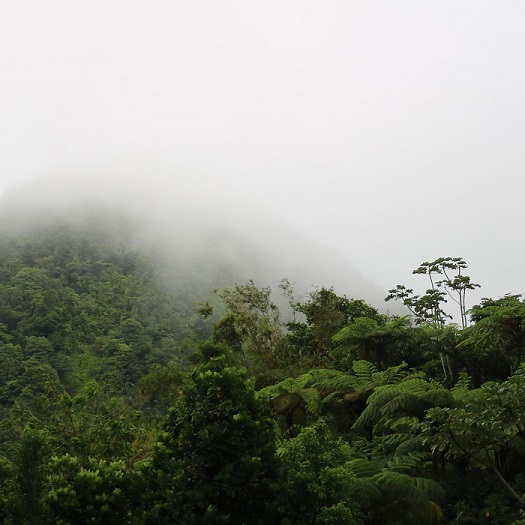
28th March 2023 Dominica is one of the “islands that kiss the clouds” a mountainous island that has beautiful rainforests. Brenda and I took a tour with friends. It was a magical day.
“Nicknamed ’The Nature Island’ of the Caribbean, Dominica lies in the West Indies and boasts mountainous rainforests abundant with plants and animals. They also host a fair few clouds, like these Stratus spotted by Bob Osborn (Member 54,749), who tells us the island’s mountain peaks are almost always shrouded in clouds. These, Bob explains, ‘keep everything lush, including the giant tree ferns that are abundant here.’ But the flow of nourishment is a two-way street. Not only do the clouds help maintain the forests, but the forests in turn contribute to the formation of the clouds. Trees in rainforests introduce moisture into the air through the process of transpiration. This is the tree equivalent of sweating, when moisture evaporates from their leaves to help keep them cool. The moist air rises and can cool enough to condense into cloud. In time, the clouds release rain and hand their moisture back to the trees, creating a self-sustaining ecosystem in which land and sky support one another. “
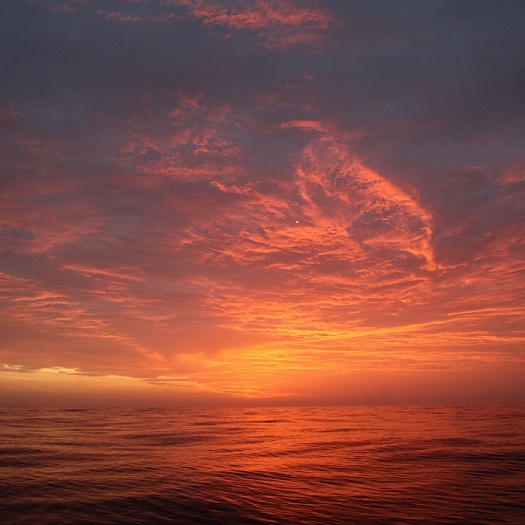
25th June 2023 Perhaps the best part of being on passage is the constant display of interesting clouds. My favorite deck watch is from 03:00 to 08:00 as I am treated to a sunrise most every morning. I often miss the sunsets as I am generally busy cooking dinner at that time.
“While sailing in his sloop, Pandora, from Saint Thomas in the US Virgin Islands to his home in Connecticut, Bob Osborn (Member 54,749) admired an Altocumulus at sunrise near the island of Bermuda. This was the stratiformis species of Altocumulus, which is when the cloud layer extends across the majority of the sky. Bob said it was a beautiful day at sea, homeward bound after a winter aboard in the Caribbean.“
5th April 2024 There is so much variation in sunrises and sunsets that watching them never gets old.
“‘So when the sun in bed, Curtain’d with cloudy red, Pillows his chin upon an orient wave, The flocking shadows pale Troop to th’infernal jail, Each fetter’d ghost slips to his several grave…’
From the ode ‘On the Morning of Christ’s Nativity’ (1629) by John Milton.
Altocumulus at sunset spotted on board the sloop Pandora while on passage from Saint Thomas, US Virgin Islands to Connecticut, US by Bob Osborn (Member 54,749).“
5th January 2025 There is no other island in the Caribbean that has captured our interest more than Antigua. Due to high winds last season we spent even more time there. With Montserrat in the distance, the view is often arresting.
“‘The sun is spent, and now his flasks Send forth light squibs, no constant rays; The world’s whole sap is sunk; The general balm th’ hydroptic earth hath drunk…’
From the poem ‘A Nocturnal Upon St. Lucy’s Day, Being the Shortest Day’ (c.1633) by John Donne.
Cumulus, Altocumulus, and Cirrostratus clouds spotted at sunset over the island of Montserrat from English Harbour, Antigua by Bob Osborn (Member 54,749).“
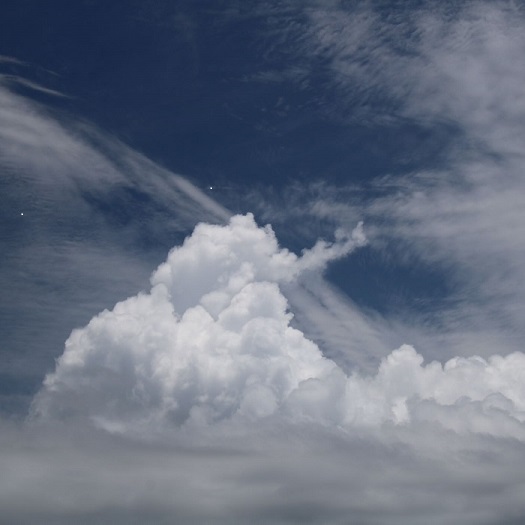
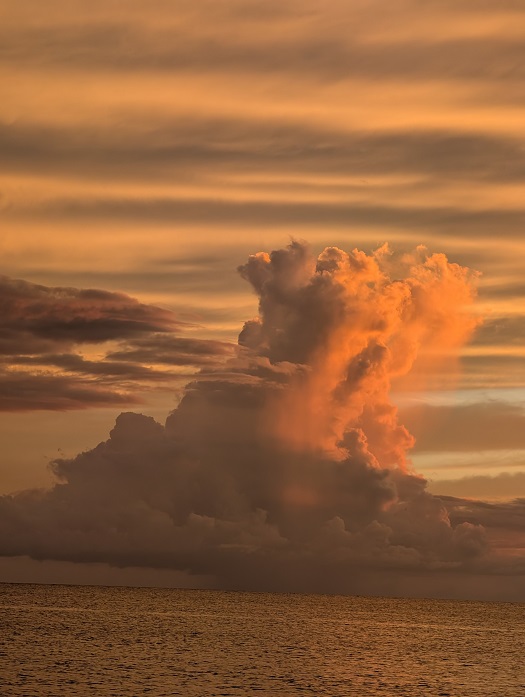
29th July 2025 In spite of this cloud’s tremendous size, we were spared the worst of the winds. Being struck by lightning, and getting my electronics fried, is my greatest fear when on passage.
“Bob Osborn (Member 54,749) was sailing the Atlantic Ocean between Bermuda and Horta island in the Azores, Portugal, on the sloop Pandora, when he spotted a Cumulus congestus cast in menacing orange by the setting Sun. This cloud appears to be dissipating, but according to Bob, it did not intend to go gentle into that good night. ‘A few hours later, we had to reduce sail as the strong winds passed over us,’ he said. ‘For certain, this beauty was a beast.’“
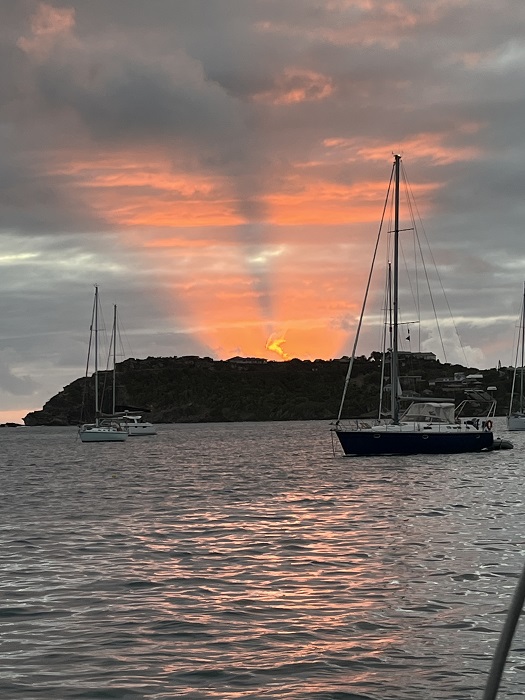
12th August 2025 It is rare for Brenda to take a photo of a sunset that I don’t also witness as we are generally together when the sun approaches the horizon. I don’t recall why I wasn’t there at that moment but perhaps I was ashore for a meeting of the Royal Naval Tot Club of Antigua and Barbuda. Brenda’s not a fan of rum so she often sits these events out. This moment was my loss…
“Brenda Osborn spotted these crepuscular rays from the deck of the boat she shares with her husband Bob Osborn (Member 54,749). They were in Falmouth Harbor, Antigua, the Caribbean. Crepuscular rays like these can appear when clouds cast shadows onto other clouds, creating beams of light and shade. In this case, a gap in the tall Cumulus clouds off on the western horizon allowed light from the low evening Sun to shine up onto the underside of Altocumulus clouds above Brenda. A small fragment of Cumulus, known as Cumulus fractus, cast its own shadow in the middle, splitting the beam into a V shape.“
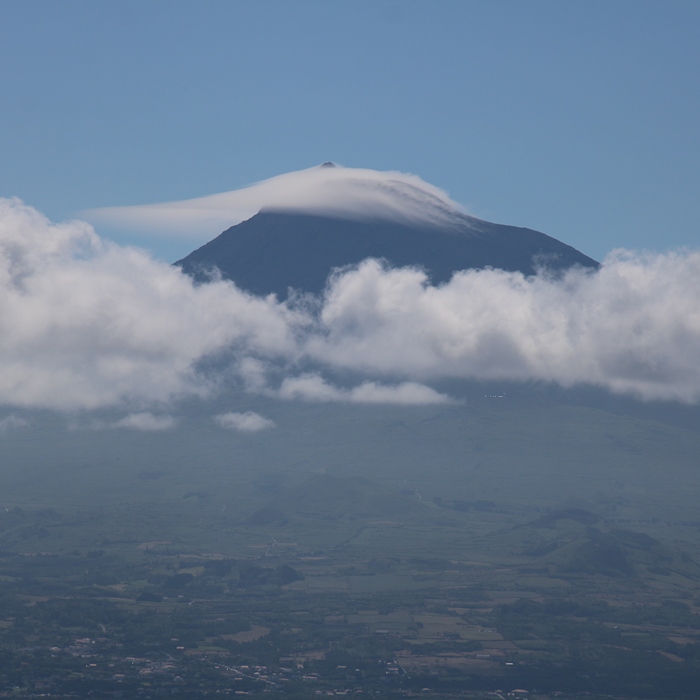
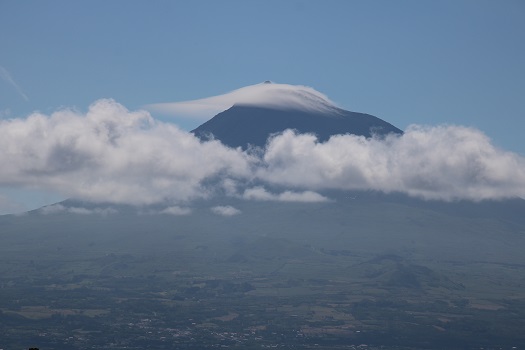
30th August 2025 After months of preparation to sail to the Azores, I was particularly entranced by the extinct volcano Pico and her many faces, always made better the cloud displays that change with the hours. During our time in the Azores, I took countless pictures of this mountain, the tallest in the Atlantic basin.
“As Bob Osborn (Member 54,749) sailed past Horta in the Azores, Portugal, he noticed that Mount Pico, an extinct volcano and the tallest peak in the Atlantic basin, was wearing a jaunty hat.
Known as a cap cloud, this is an example of the lenticularis species of cloud forming directly over, or in contact with, the peak of a mountain or hill. It develops as a wave of moist air flows over the summit, cooling enough at its crest for some of its moisture to condense as a smooth cap. Cumulus humilis clouds drift by in the foreground.
Perhaps from its height of 2,350 metres (7,710 feet), Mount Pico could see a change of weather coming and decided to dress accordingly.“
There is something magical about clouds and while I have always loved looking up into the sky, being a member of the Cloud Appreciation Society has made me even more keenly aware of the simple pleasure of enjoying the constantly changing display.
I hope that you too enjoy Cloud Appreciation Day on September 12th. I’m ready and will be wishing for the perfect photo that will make my Cloud-A-Day submissions a baker’s dozen.
Some years ago I saw an article in the New York Times about a fellow in the UK that has a “society” with the mission of appreciating clouds, a group aptly called The Cloud Appreciation Society.
The founder, Gavin Pretor-Phinney, (a perfect name for a guy who would do such things) founded the group in 2005 following his appearance at a literary festival in Cornwall. Packaging is everything and he was afraid that nobody would attend his talk so he entitled it “The Inaugural Lecture of the Cloud Appreciation Society.”
The only rub was that the society didn’t exist but his talk was a hit so he quickly formed the group and within a few months he had over 2,000 members and the rest is history. As member 54,749, and that was my number when I joined in 2021, I am clearly not alone in loving clouds.
The model is that members recommend “clouds” in the form of a photo, a piece of art of anything that evokes clouds and will mean something to their admirers. And, if the CAS feels that your “cloud” is worthy, it is sent out to the full membership and they do this 365 days a year.
I was so taken by the group that I wrote this post about Gavin, his society, and included a few of my own favorite photos of clouds. Check it out… This post includes a link to Gavin’s Ted Talk “cloudy with a chance of Joy.” It is worth watching.
Over the years I have submitted more than a few “clouds” and I am always thrilled when they choose to distribute my picture to their members.
I don’t know how many of my images have been chosen but today yet another landed in my inbox, the third this year, a personal record. Yahoo! With more than 50,000 members and only 365 days in the year, I doubt that there are many 3-photos-a-season-members. Whether or not there are others, I’m going with that for now.
Today’s cloud, taken by me in the Azores, is particularly meaningful as arriving in Horta marked the completion of my longest ocean passage to date, the nearly 2,000 mile run from Bermuda as leader, and participant, in the inaugural “Salty Dawg Rally to the Azores”. My entire run from Trinidad to Spain was nearly 5,000 miles but the Bermuda to Horta leg was a particular biggie.
When an image is sent out to their members, they give credit to the author as well as add additional information about why that particular cloud might be important to those who love clouds.
Today’s cloud…mine…August 30th.
“As Bob Osborn (Member 54,749) sailed past Horta in the Azores, Portugal, he noticed that Mount Pico, an extinct volcano and the tallest peak in the Atlantic basin, was wearing a jaunty hat.
Known as a cap cloud, this is an example of the lenticularis species of cloud forming directly over, or in contact with, the peak of a mountain or hill. It develops as a wave of moist air flows over the summit, cooling enough at its crest for some of its moisture to condense as a smooth cap. Cumulus humilis clouds drift by in the foreground.
Perhaps from its height of 2,350 metres (7,710 feet), Mount Pico could see a change of weather coming and decided to dress accordingly.”
Another of my images was published recently of a storm cloud that we encountered on our passage from Bermuda to Horta, our planned landfall.
“Bob Osborn (Member 54,749) was sailing the Atlantic Ocean between Bermuda and Horta island in the Azores, Portugal, on the sloop Pandora, when he spotted a Cumulus congestus cast in menacing orange by the setting Sun. This cloud appears to be dissipating, but according to Bob, it did not intend to go gentle into that good night. ‘A few hours later, we had to reduce sail as the strong winds passed over us,’ he said. ‘For certain, this beauty was a beast.’”
And for the first time, earlier this year, I submitted a photo taken by Brenda in Antigua over the winter, which they chose. We were at anchor in Falmouth Harbor and while I was aboard, I never saw this and am so pleased that Brenda took the time to memorialize the moment. I guess that the editors at the CAS felt the same way when they sent this image out on August 12th.
“Brenda Osborn spotted these crepuscular rays from the deck of the boat she shares with her husband Bob Osborn (Member 54,749). They were in Falmouth Harbor, Antigua, the Caribbean. Crepuscular rays like these can appear when clouds cast shadows onto other clouds, creating beams of light and shade. In this case, a gap in the tall Cumulus clouds off on the western horizon allowed light from the low evening Sun to shine up onto the underside of Altocumulus clouds above Brenda. A small fragment of Cumulus, known as Cumulus fractus, cast its own shadow in the middle, splitting the beam into a V shape.”
I agree with Gavin and the other 50,000+ plus members that “cloud spotting” is among the purest of pursuits and one that being a member has made me appreciate all the more.
The Cloud Appreciation society says, and I agree, that…
“We believe that the sky is the most extraordinary thing to look at, and that we should take the time to lie on our backs in a field and watch the clouds roll by. The act of lying on your back, staring up at the sky, and seeing nothing but clouds is the best possible antidote to the chaos and stress of everyday life.“
In these particularly chaotic times, looking up at the sky and, for me, being a member of The Cloud Appreciation Society is more important than ever.
So, go outside, stop doom-scrolling on your phone, for a moment, and look up at the clouds. Perhaps you will feel better. I do, every day. And that is in spite of a fair amount of doom-scrolling on my part, I’ll admit…
Hopefully, better times are on the horizon, or should I say “in the clouds”
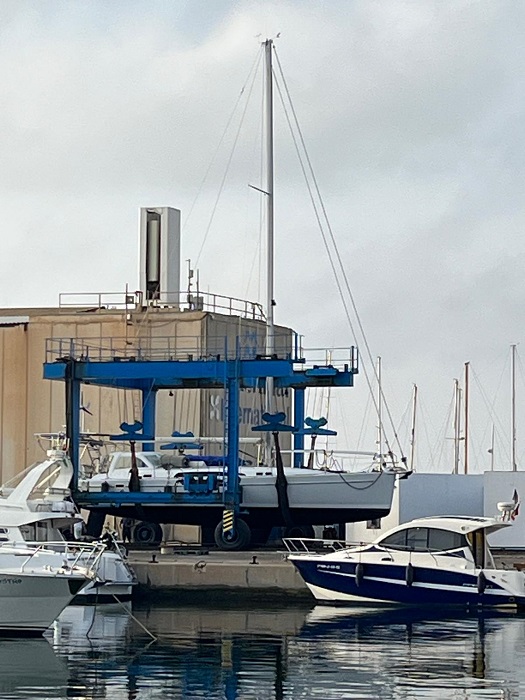
Well, that’s it for now. Pandora has been hauled in Almerimar where she will be until we return next spring to begin cruising the western Mediterranean.
Somehow, after a week of getting things ready, it was still a scramble to get Pandora over to the lift dock for her 08:00 appointment.
I won’t try to itemize all the things that go into putting a complicated boat like Pandora into storage but I can say that it took days to accomplish all of it.
The good news is that while it is very hot in Almarimar right now, by September and throughout the winter it will become a lot cooler so perhaps she will fair well.
I have hired a mechanic, “boat sitter” who will keep an eye on her and arrange for repairs and routine maintenance that needs to be done as well as arrange to have her launched in advance of our arrival in April.
He seems knowledgeable and was recommended by the manager of the leading chandlery in town so I am fairly confident that she is in good hands. He met us on the dock and assisted with handling Pandora into the slip to be hauled.
Brenda took a few photos of her being hauled. She was happy to be far away from the action.
Her sad rudder. At first glance it doesn’t look like a big issue to repair but they may have to pull the rudder, post and all, which is a big deal. To pull the rudder involves a good amount of internal disassembly. And she has to be positioned over a deep pit so that they can lower the rudder and shaft down enough for the shaft to come out.
Also, the vane steering shaft is bent and that will require disassembly, not counting new parts.
Well, at least labor rates in Spain are less than the US. Actually, rates just about everywhere is less than the US with the possible exception of those in Bermuda.
After Pandora was safely on the hard we left for the six hour drive to Madrid where we are now enjoying nearly a week of sightseeing. Our hotel is in the heart of the historic district and central to great dinning and more museums than we have time to see.
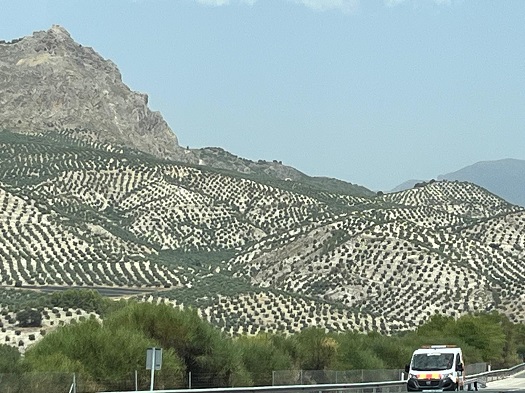
Along the way to Madrid the terrain changed from near desert, where nothing will grow, to semi/mostly arid with olive farms that went on for as far as the eye could see.
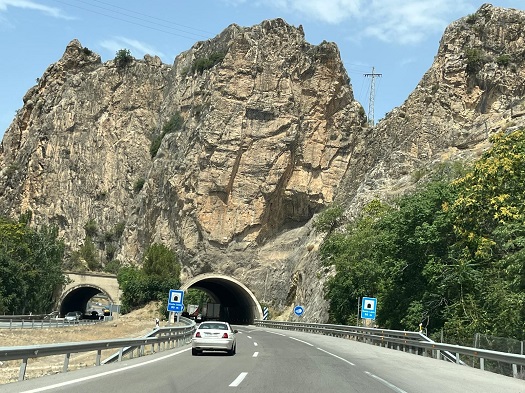
The terrain was remarkably rugged with tunnel after tunnel cut through the cliffs.
With our little Fiat 500, I had to constantly downshift to keep moving as the grades were pretty steep and in spite of my best efforts, wasn’t able to keep to the 100 KPH speed limit except when the road was flat or, better yet, downhill. I am fine with little cars but did feel quite exposed on the highway when surrounded by the tandem trucks that were constantly around us.
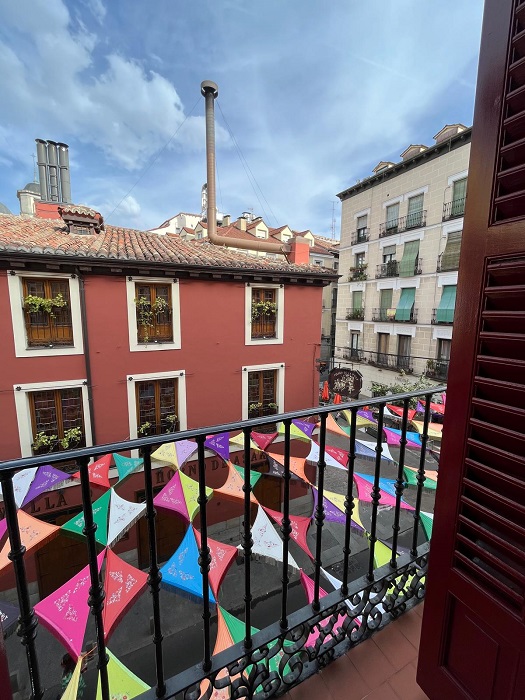
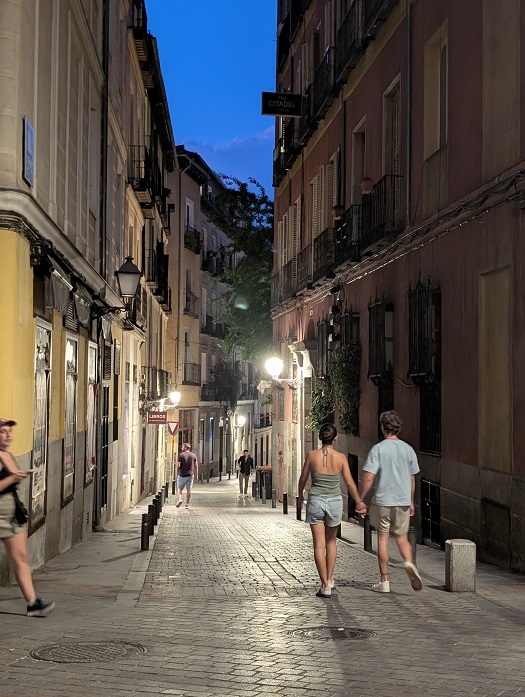
The location of our hotel is lovely, festooned with flags over the entire street. The view from our window on the second floor. The hotel is the Posada del Dragon, a very charming place.
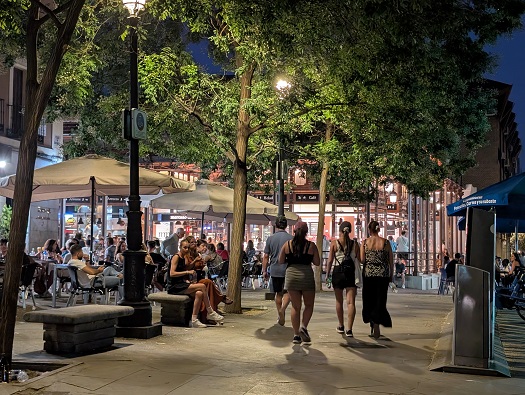
We have enjoyed spending time in small street cafes and with the 100 degree temperatures, it’s more fun to sit and watch the world go by during the heat of the. Somehow a glass of sangria makes everything seem ok.
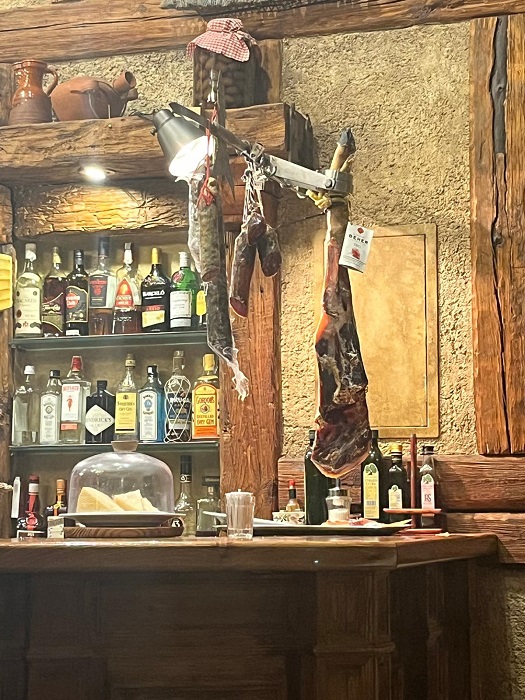
It’s fun to wander down side streets looking at menus and picking a place to eat. This scene, where we ate one evening, looks more like a still life painting than I realized when Brenda took the photo.
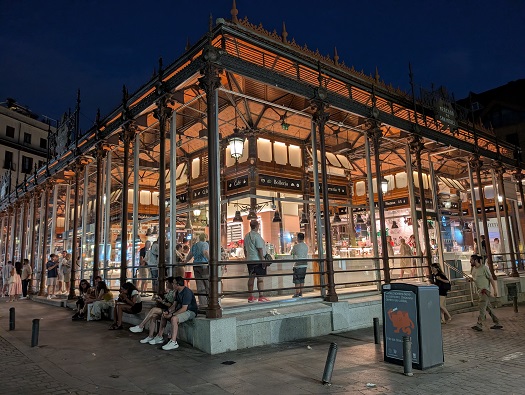
As we strolled back from dinner one evening the light was magical from inside this 100 year old gourmet market.
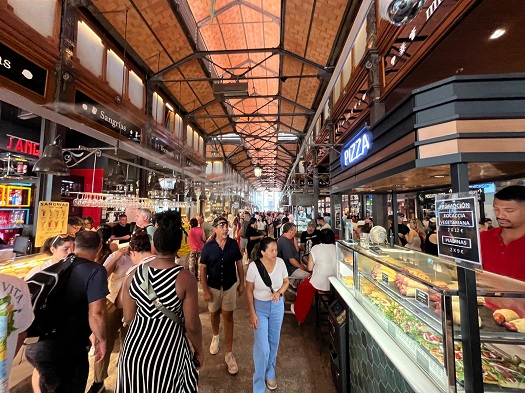
All the vendors lining the aisles.
Lovely little side streets.
Dining really doesn’t get going until after 9pm, way past our normal bedtime.
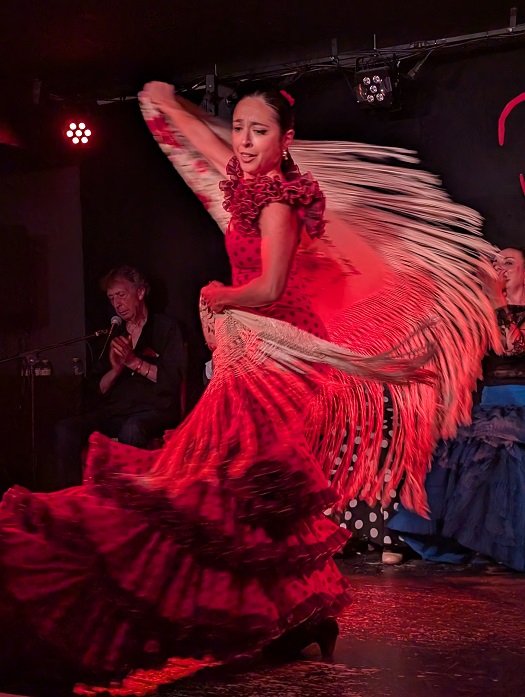
And speaking of nighttime. Brenda got tickets to a Flaminco dancing show last evening and it was just terrific. There were 4 dancers, two singers and a guitar player. We had amazing seats, literally three feet from the dance floor. To watch these dancers up close while drinking a sangria was very special. This photo, of one of the dancers captures the drama of the moment pretty well. How she tossed her long skirt as she twirled made me wonder how often she ended up landing on the floor during practice. Check out this very short video of her finale.
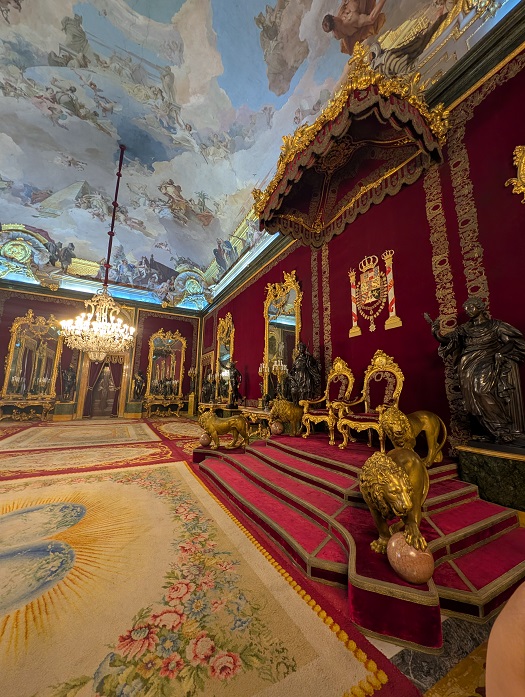
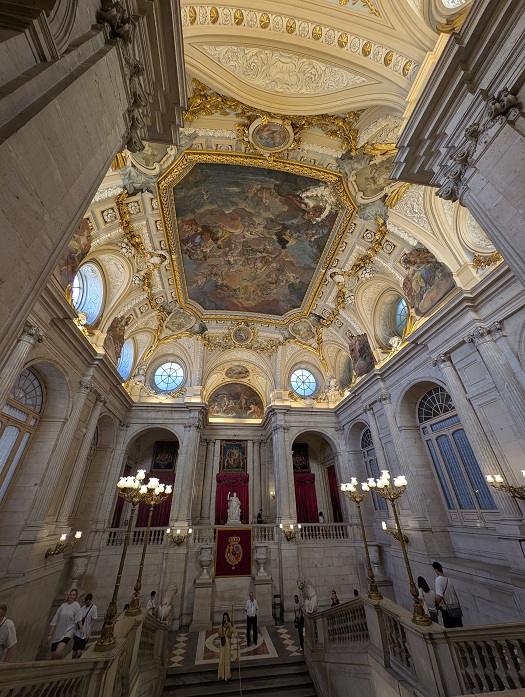
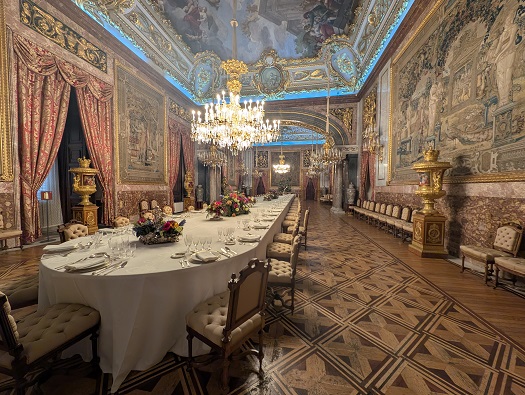
Each day we have toured historic buildings, including the royal palace and I have to say that the over the top Rocco gold gilt everywhere in these buildings made me a bit sad as it reminds me of what has become of the Oval Office in recent months.
Each room, if the word “room” is sufficient to describe such a space, is over the top.
Perhaps some design ideas for the new ballroom for the Whitehouse.
On that subject, when I was returning the rental car to the airport the other day, I was struggling with the metro to get back to the hotel and was helped by a lovely young couple from Spain. We got to talking and they told me that they and others, when meeting an American nowadays, immediately see us very negatively.
This year in particular, we have run into this time and time again and have even been advised to be clear from the start, when meeting someone local, to make it clear that “we are not like that”. Sadly, the phrase “ugly American” has taken on a new meaning as we were never seen in a particularly positive light to begin with.
Anyway, we will see how it all turns out but I am not optimistic. One can only hope…
After months of moving Pandora north from Trinidad and into the Med, I am very glad that she is now on the hard until spring as I can use a break from the constant moving, dealing with the repairs that is life on a cruising boat and crew changes along the way.
I enjoy time aboard and am looking forward to exploring new waters next year with Brenda but not quite yet…
No need to think about all that now as Pandora is put to bed.